Weep holes serve two important purposes.
1. Ventilation of the internal wall cavity - Without ventilation, mildew, dry rot and damp reduce the life of the internal wall studs and other building materials within the cavity. Inadequate ventilation is the main cause of "Leaky Building Syndrome".
2. Drainage - Water that enters the cavity due to capillary action, condensation, damage, or accidental flooding needs to escape somewhere. In tropical and sub-tropical areas of Australia it is not unusual to see water flowing from the weep holes on the prevailing side of well constructed houses after a 'gully raker' or monsoonal storm.
No, as long as the flashing in your wall has been properly installed this is not possible. The only exception is where a poorly designed pathway, concrete slab or garden has been constructed next to the wall. In this case storm water can dam up above the level of the flashing and flow in through the weep holes.
There are many possible causes for damp and moisture problems in walls including:
- Poorly installed waterproofing and flashing.
- Faulty roof installation or corrosion.
- Faulty plumbing.
- Unintended conduits from the outer skin to the interior such as incorrectly installed brick ties or incorrectly drained air conditioning units.
Under no circumstances should you block the weep holes as whatever the problem is this will make it worse, possibly much worse. You can also find information about independent research on whether extreme weather can cause rain to blow into weep holes and up through the wall cavity.
To answer simply, No. Independent testing by Dr Daniel James at Griffith University showed that Weepas cause "no significant restriction of the airflow under typical, normal and extreme operating conditions".
Be sure to remove the mortar guards after installation. We've witnessed a number of building where the mortar guard has not been removed after the job is complete. This is likely to restrict airflow.
Yes. Without weep holes your home is at risk of Leaky Building Syndrome. You should get professional advice without delay.
If you have already built without one of our Weephole formers it is possible to use one of the products below. Both come with a simple tool for installation and comply with NCC:2025 for ventilation ensuring adequate airflow to the cavity. Be aware that there are other retrofit guards and materials on the market which essentially block the weep hole exposing creating the risk of Leaky Building Syndrome.
1. The patented Protector Weep Hole Screen can be inserted into an existing weep hole for vermin exclusion and bushfire protection. It complies with AS3959:2018 for all Bushfire Attack Levels and excludes a wide range of pests.
2. The patented Termite Protector Weep Hole Screen can be inserted into an existing weep hole to deter entry by termites via weepholes. Infused with bifenthrin, it is designed to be replaced every two years for ongoing protection.
Yes, we're so proud to have launched the new Termite Protector Weep Hole Screen. This little beauty is a patented retrofit device, infused with bifenthrin, designed to deter entry by termites via weepholes for two years, while complying with NCC (2025) for ventilation.
The Termite Protector is the outcome of many years research and development. It's been prompted by a constant stream of enquiries into the Weepa office mainly about whether the High Performance Bushfire Weepa, with it's fine stainless steel mesh with aperture of 0.415, could exclude termites.
Our answer has always been that no weep hole cover or guard, plastic or metal, can protect your house against termites as there are inevitably tiny cracks in the mortar around the bricks which are large enough for these determined creatures. It's always been a concern to us that there are other products and materials on the market promoted as termite barriers for weep holes sometimes made entirely of plastic, which is a favourite food of many termites.
So, the new Termite Protector Weep Hole Screen is ground breaking. However, we'll always recommend that you also continue to use the usual termite prevention procedures, get regular professional inspections and keep vegetable matter and timber away from brick walls so the weep holes are not bridged.
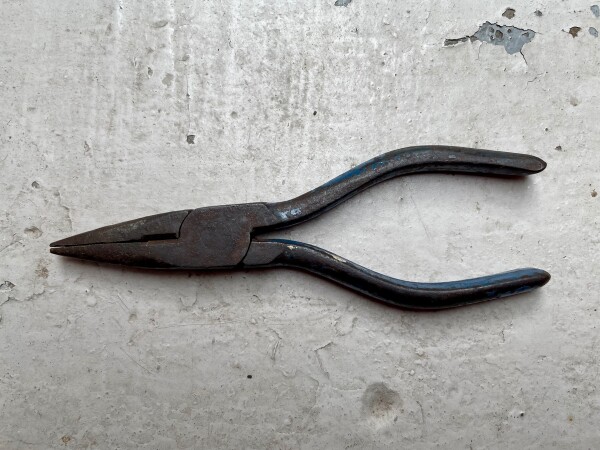
1. Grab a tool. Pointy nose pliers work best. If you do not have these, try a household object like tweezers, a BBQ skewer or a pen.
2. Pinch the Termite Protector's fringe with the pliers.
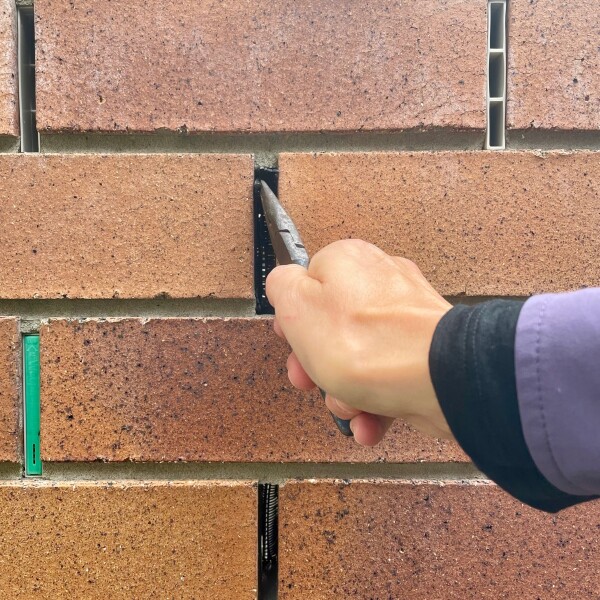
3. Pull the Termite Protector Weep Hole Screen out of the weep hole.
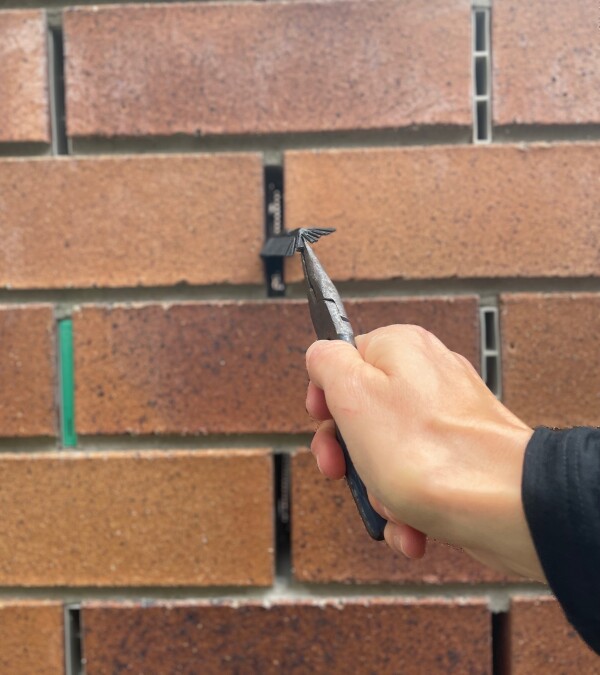
4. All done! Move on to the next.
Click on the link to check out our helpful guide on installing Protector Weep Hole Screens in existing weep holes that are too short or too narrow:
The NCC (2025) Australian National Construction Code provides direction on basic weephole requirements such as size, spacing and location of weepholes for drainage and ventilation in the construction of masonry buildings. This can change depending on requirements such as building classification and bushfire prone area requirements (see Bushfire Compliance in Detail).
However, your architect or building designer will specify weepholes according to the needs of your particular project. In addition, your Building Certifier will be able to provide specific guidance. We recommend that when designing for damper climates and air-conditioned buildings closer spacings should be used. This gives greater airflow to dry cavities.
Fine stainless steel mesh screens the weep hole 15mm inside the cavity. The secret is the plastic grate that you see at the front of the High Performance Bushfire Weepa. Under extreme heat attack it resists melting and chars like burnt toast. This fixes the stainless steel mesh screen in place protecting the cavity against ember attack. The High Performance Bushfire Weepa has been tested in accordance with AS1530.8.1:2018 to meet these standards. More detail.
Both products use the New Generation Weepa grate. A clever and proven grate design that provides excellent protection against bushfire ember attack. When used in combination with New Generation Weepa body (which is polymer only), the combined product can withstand the harsh levels of bushfire attack required to comply with BAL-A40. When this same New Generation Weepa grate is used in combination with the new, innovative Hybrid FZ Weepa body, that combined product can withstand the extreme bushfire attack associated with BAL-FZ (Bushfire Attack Level Flame Zone).
The big difference here is the “Bushfire Attack Level” rating (or BAL rating). The New Generation Weepa is suitable for all BAL ratings up to and including BAL-A40, but if you need a BAL-FZ rated product, you will need either the new Hybrid FZ Weepa (our new, innovative solution for BAL-FZ compliance) or our Stainless Steel Weepa.
Both products are suitable for use for all BAL ratings, up to and including BAL-FZ. While the Hybrid FZ is a more economical solution for BAL-FZ compliance, the Stainless Steel Weepa is our prestige product providing a premium architectural finish. With its fully stainless-steel construction, the Stainless Steel Weepa continues to be the top‑of‑the‑range choice for those seeking both BAL‑FZ compliance and standout design.
Many of the requirements that relate to weepholes in the new 2025 National Construction Code (NCC:2025) remain the same as the previous version of the Code.
There is however a new and important section that relates to Condensation Management for external cavity walls. In many cases, this will require less distance between weepholes to meet a drained and ventilated cavity wall openings requirement of 1000mm2/m (and perhaps weepholes at the base and top of the cavity). This can be very project specific, particularly if unusual sized bricks, blocks or weepholes are used. Please check how these requirements might relate to your project with your Certifier.
Think Brick have published a handy fact sheet with practical examples of how compliance to this new requirement can be achieved (see NCC 2025 Ventilation of Cavities Factsheet link here)